
Bespoke business software launched in days, not months.
AgentQ builds your software. Real developers make sure it works in production.
Book a Demo20,000+
Apps built on QwikBuild
99%
Platform uptime
Days
Idea to launch
1st
Out of 6 tested AI coding platforms
Vibecoding gets you 70% there. We bridge the gap.
Helping non-technical founders & small business owners finish what they started.
The demo works. Real users break it.
✕Login/Auth doesn’t work
✕Payments fail on production
Shared infrastructure. Zero security.
✕Broken databases & access control
✕No encryption & vulnerabilities
Code you can’t own, read, or hand off.
✕Illegible AI-generated spaghetti code
✕Hard to export off platform
Credits burned. Nobody to turn to.
✕“Fixes” create new bugs
✕AI loops on the same error
Taking you from built to launched, one step at a time.
How it works
From idea to launched product.
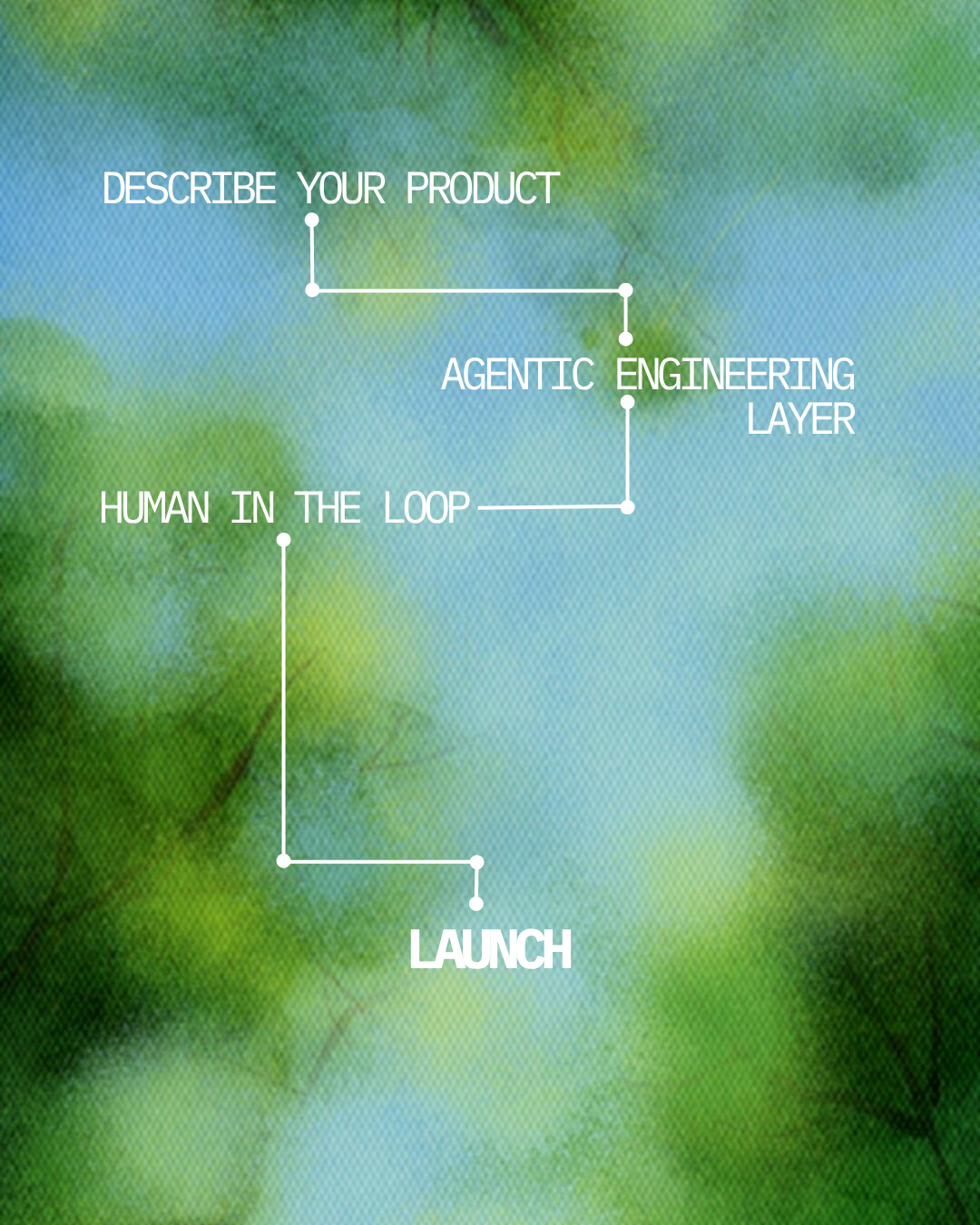
Describe your product.
Tell us what you need — a customer portal, a booking system, a SaaS app. Our PM agent asks the right questions to turn your vision into a build plan.
AgentQ builds it.
Backend dev designs your database and APIs. Frontend dev builds the UI. Code auditor reviews every line. All in days.
Real developers step in.
Complex integrations, payment gateways, architecture reviews. Real engineers in your workflow — not a chatbot, not a forum.
You launch.
One-click deployment. Dedicated database. Enterprise security. Clean code you own completely. Live in days.
Dev Assist Ensures You're Never Stuck, Never Alone.
Real engineers in your workflow to help with the tricky bits.
Architecture & planning
Build an app that doesn’t break when it scales with intelligent database design, API layouts & system architecture.
Integrations
Wire up APIs like payment gateways, CRMs, analytics tools & any third-party services seamlessly.
Code review & security
Professionally review your security, performance & best practices before you go live.
Deployment & go-live
Launch with no surprises after verifying that everything works with a developer who knows your code.
Production ready from the get-go.



Connect everything. Build on top.
Native connectors with field-level access scoping. 60+ integrations via REST/Webhook.
Snowflake · BigQuery · Databricks · Redshift
RFC/BAPIs · OData · iDocs · SAP events
Objects · Flows · Apex · MuleSoft APIs
Oracle · Jira · Confluence · Slack · M365 · Google Workspace
Okta · Microsoft Entra · Google · Auth0 · SAML/OIDC
REST + GraphQL · Webhooks · OpenAPI schema export
Can't see what you need? We build custom connectors.
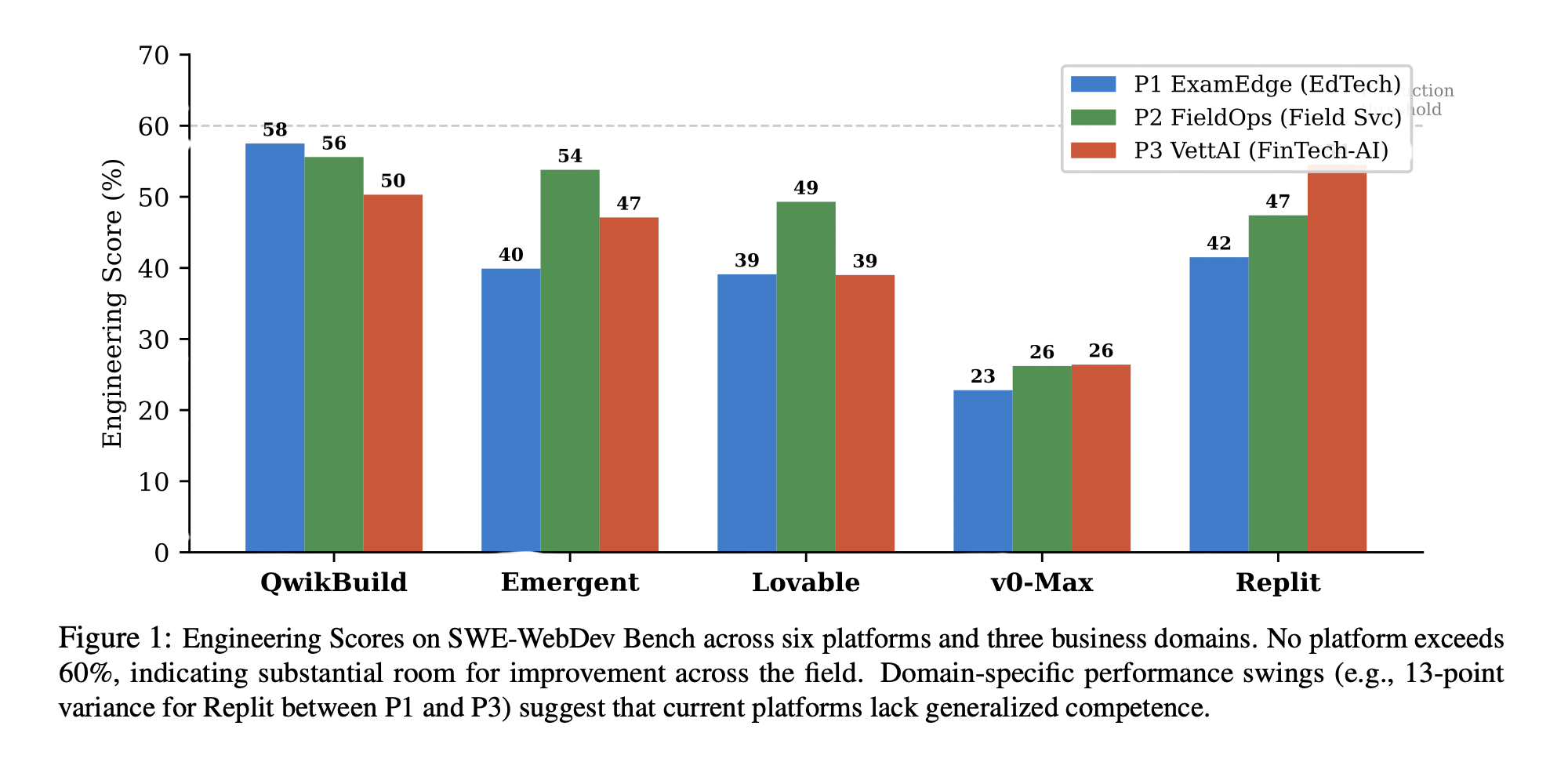
Independently tested. Measurably better.
97.7% of requirements captured on the first attempt.
The next closest platform captured 57%.
12 hours to production-ready.
The next closest platform needed 26 & the worst needed 60.
15 questions asked before a single line of code.
AgentQ figures out what you actually need before it builds.
96% accuracy. What we say was built, gets built.
A competitor showed 35% of features as built when they weren't actually working.
For the technical details
AgentQ was evaluated across 68 metrics against 5 leading AI coding platforms using the QwikBuild-Bench framework.
Read the full evaluationSee the data in action.
Start building and we'll walk you through what AgentQ can build for you.
Book a DemoReal products. Real launches. Real outcomes.
Simple pricing. Scale when you're ready.
Three plans. No surprise invoices.
Business
For early-stage founders and small teams
$600 billed quarterly
600 credits / month- ✓1–3 Hour Build Time
- ✓Developer Assist Credits
- ✓3 hours SLA on Dev Assist
- ✓Dedicated PostgreSQL with Full Access
- ✓Unlimited Custom Roles & RBAC
- ✓Multiple Auth Methods (OAuth, Email, Phone)
- ✓Type-Safe Code + AI Code Audit
- ✓Execution Traces & Full Code History
- ✓Scalable Serverless Architecture
- ✓XSS, SQL Injection & DoS Protection
- ✓Direct Code Editability
Scale
RecommendedFor teams who want it built and run for them
$1,500 billed quarterly
1,500 credits / month- ✓Everything in Business, plus:
- ✓2 Managed Agents — built, trained & operated by us
- ✓1 Production App Built For You
- ✓Priority Build Queue
- ✓1 Hour SLA on Dev Assist
- ✓Dedicated Onboarding Specialist
- ✓Monthly Agent Tuning & Review
Enterprise
For teams with complex enterprise systems
Scoped to your systems and team
Dedicated capacity- ✓Solutions architect from day one
- ✓30 min SLA on Developer Assist
- ✓SAP, Salesforce & data warehouse connectors
- ✓Org team collaboration & sharing
- ✓Private cloud deployment
- ✓Hands-on training on AI agentic engineering
- ✓Dedicated PostgreSQL with full access
- ✓Unlimited custom roles & RBAC
- ✓Enterprise security suite (XSS, SQLi, DoS)
- ✓Custom development
- ✓Full code ownership & editability
The cost of the alternatives.
| AI Builders | AgentQ | Agencies | Hiring | |
|---|---|---|---|---|
| Cost | $20–$100/mo | $200/mo – Custom | $5K–$50K per project | $80K+/year |
| Skill required | None | None | Must manage the project | Must recruit and manage |
| Output | Demo-ready | Production-ready | Production-ready | Production-ready |
| Dev support | None | Built into every plan | Full team (at full price) | You are the manager |
| Time to launch | Fast to start, months to finish | Days | Months | Months to hire, then months to build |
| The reality | Breaks when real users show up | Ships and scales | Works, but the cost and time hurt | Works, but the cost and time hurt |
AgentQ
Cost
$200/mo – Custom
Skill required
None
Output
Production-ready
Dev support
Built into every plan
Time to launch
Days
The reality
Ships and scales
← Swipe to compare →
FAQ
Common questions.
No. Describe what you need in plain language. AI agents handle the architecture, frontend, backend, and database. When things get complex, real developers step in.
Bring it. We can work with what you’ve started or help you start fresh — whichever gets you to launch faster.
Completely. Clean, documented code that’s yours. Hand it to any developer. Move it anywhere. No lock-in.
Those tools are powerful — for developers. They require you to debug errors, make architecture decisions, and handle deployment. AgentQ is for people who want to describe what they need and get working software back.